Skip to content
HlthLynk

Specialties

Deep in one specialty before wide in many.

Most alternatives stretch one generic template across many specialties. HlthLynk takes the opposite bet: earn the right to be multi-specialty by being genuinely excellent in one at a time — starting where clinical complexity is highest and the tools are thinnest.

Live today

Neurology

Neurology isn’t a checklist item alongside a dozen other specialties — it’s the specialty the whole product was designed around first, built working alongside a practicing neurologist rather than guessed at from outside.

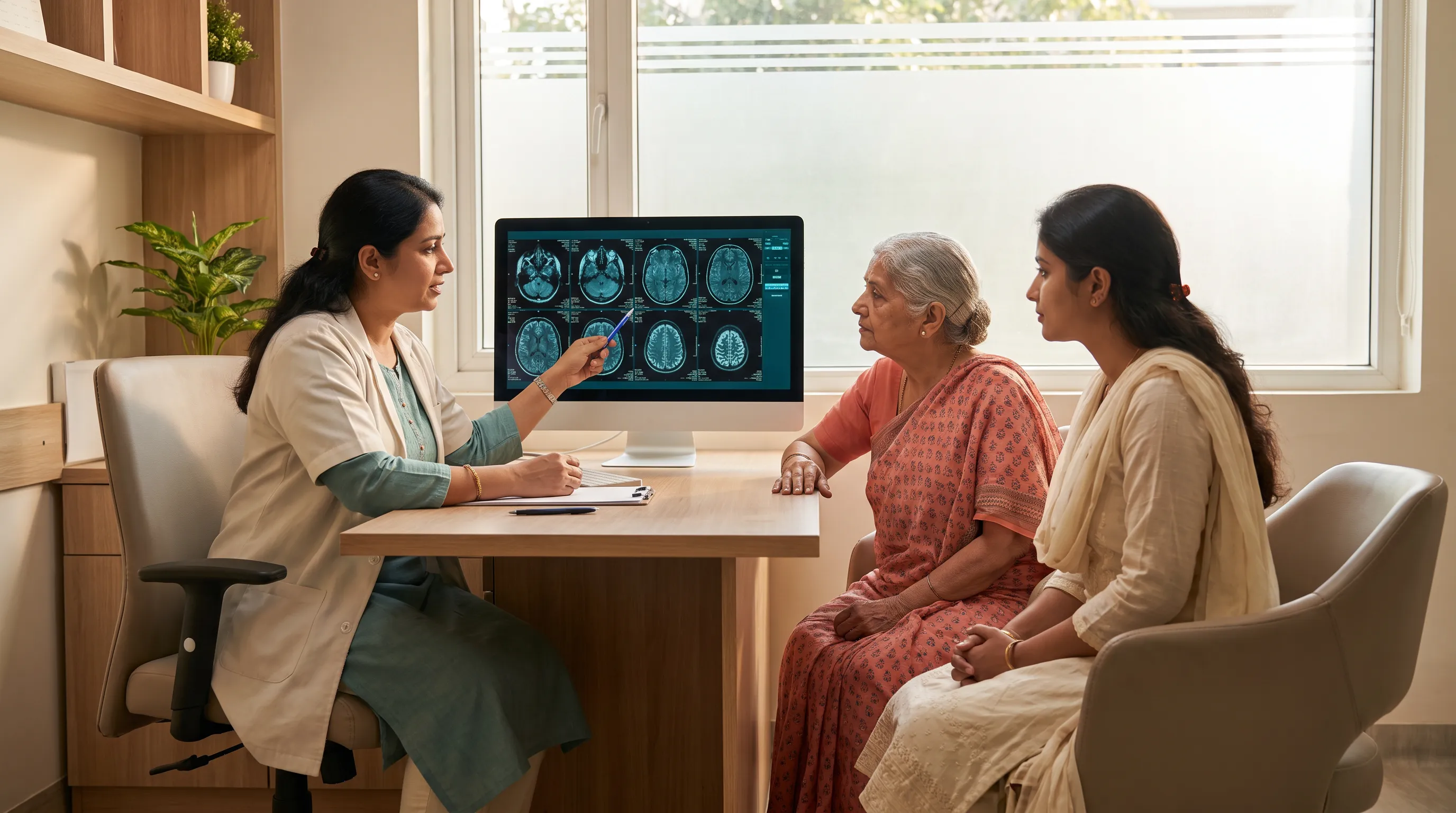
A neurologist walking an elderly patient and her daughter through brain scan images in an Indian consultation room

Stroke care

An acute workflow built around the clock: onset, door, scan and treatment timestamps captured as they happen, standard severity and outcome scales built into the exam itself rather than bolted on as a separate form, and a secondary-prevention tracker that flags the gaps that matter most — a stroke patient who left without a statin on their prescription, for instance.

Epilepsy

Structured seizure-history capture, a medication-history grid built for a condition where “what was tried before and why it was stopped” often matters more than what’s being tried now, and a seizure calendar patients and caregivers can keep on WhatsApp between visits.

Headache & migraine

A diagnostic interview and validated impact scales built in from the first visit, plus a WhatsApp-based headache diary so a doctor sees the actual pattern between visits instead of relying on a patient’s memory of “how many bad days” it’s been.

Movement disorders

Guided, structured versions of the scales this specialty actually runs on, with medication-response and symptom trends tracked over time instead of re-assessed from scratch at every visit.

Dementia & cognitive care

Informant-based history built for a specialty where the patient often isn’t the most reliable narrator, cognitive scales adjusted for the education and language variation Indian norms require, and caregiver-burden tracking built in as a first-class part of the visit, not an afterthought.

Built around a real 60-patient OPD day — with the validated scales, registries and WhatsApp follow-through described on the Platform page running underneath all five areas.

Built next, the same way

The comorbidity cluster that defines chronic care in India.

A stroke patient is a cardiology patient is often a diabetes patient. Each of these builds is roadmap-stage today — shared here as design targets, not shipped features — and each ships only when it meets the depth bar neurology set.

Next

Cardiology

Heart disease in India rarely shows up alone — it travels with diabetes, with kidney strain, with a stroke risk that’s often already elevated before a cardiologist ever sees the patient. HlthLynk’s cardiology build extends the same playbook proven in neurology: structured, protocol-driven follow-up for the conditions that define long-term cardiac care — post-event recovery tracking, heart-failure monitoring, anticoagulation and risk-factor management — with the same WhatsApp-native follow-through chasing the labs and check-ins that actually determine outcomes between visits.

A cardiologist listening to a patient's heart with a stethoscope in a modern Indian clinic
Next

Endocrinology

Diabetes and thyroid care are almost entirely about the trend, not the single visit — one HbA1c in isolation tells a doctor far less than that HbA1c next to the last four. HlthLynk’s endocrinology build is being designed around exactly that: trend-first documentation, titration tracking, and the same AI-governed follow-through — reminders, adherence check-ins, report chasing — applied to a specialty where consistency between visits is most of the battle.

Next

Nephrology

Chronic kidney disease is often the downstream consequence of the same diabetes and hypertension already being managed elsewhere in a patient’s chart — which is exactly why it belongs on the same platform rather than a separate one. Staged CKD tracking, dialysis-adjacent care coordination, and a comorbidity-aware view tying kidney function back to what’s happening in a patient’s cardiology and endocrinology records are the design targets for this build.

Next

Oncology

Long-term cancer care is a documentation-heavy specialty almost by definition — staging, treatment-protocol tracking, and years of survivorship follow-up that are easy to lose track of in a general-purpose EMR. HlthLynk’s oncology build aims to bring the same structured, protocol-driven approach proven in neurology to that entire arc, from diagnosis through long-term surveillance.

And after that

The rest of the platform

Every specialty after these five gets the same question asked first: what does this specialty’s actual practice look like, and what does a doctor in it need that a generic form doesn’t give them? That question — asked with a practicing specialist in the room, not answered by a product team alone — is what “multi-specialty” is going to keep meaning here.

Practice in one of these specialties?

Request early access and tell us where you practice — neurologists can start now, and every other specialty on this page gets first access as its build opens up.

No subscription fee for the core platform. No credit card. No hardware to buy.